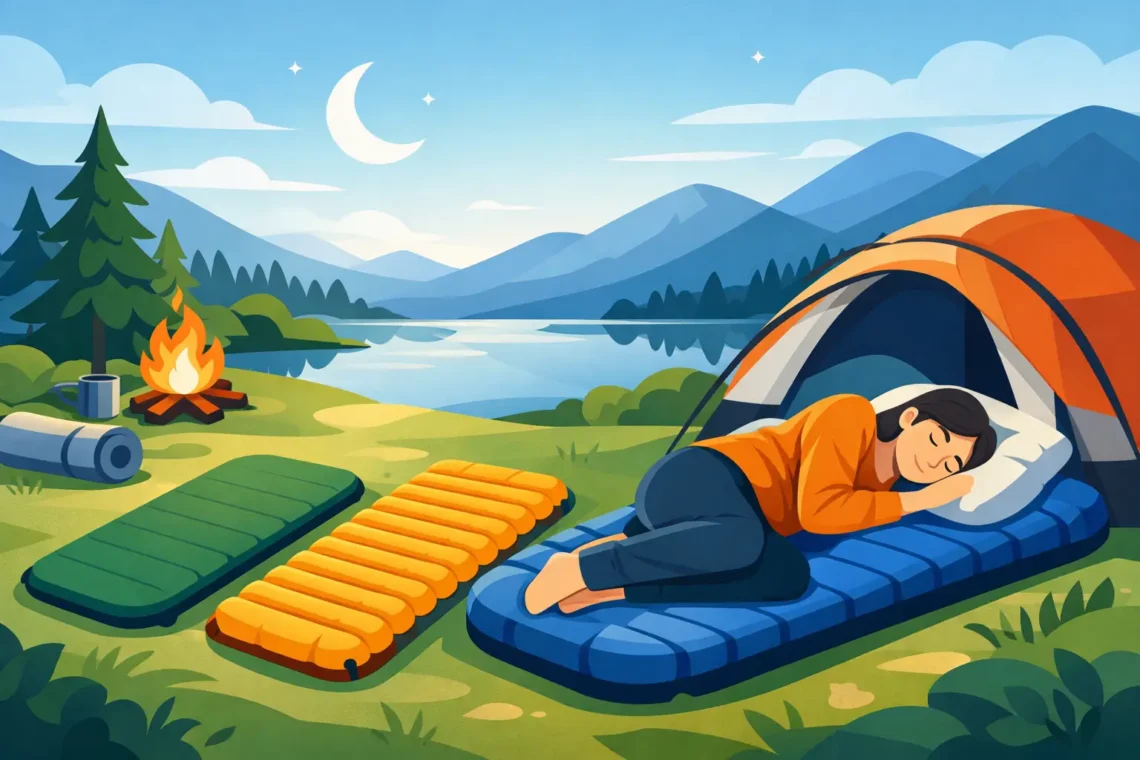
If you sleep on your side, a bad pad will ruin a camping trip faster than a leaky tent. Hip pressure, shoulder pain, and that familiar numb arm at 2 a.m. are exactly why finding the best camping sleeping pad for side sleepers matters more than shaving a few ounces off your pack.
Side sleepers need more than a generic “comfortable” pad. You need enough thickness to keep your shoulder and hip from bottoming out, enough support to hold you level, and enough warmth so cold ground does not creep in underneath the spots carrying the most weight. That narrows the field quickly, which is good news if you are trying to buy once and buy right.
What side sleepers should look for first
The biggest factor is thickness. For most side sleepers, anything under about 3 inches starts to get risky unless you are very light or sleeping on soft ground. At 3 to 4 inches, most campers get enough cushion to protect pressure points without feeling like they are floating on an unstable air mattress.
Shape matters almost as much. Mummy pads save weight, but they can feel restrictive if you shift positions or bend your knees. Rectangular pads usually feel better for side sleeping because they give you more usable surface area. Wider options are also worth the extra money if you toss and turn.
Then there is insulation. A thick pad can still sleep cold if it lacks a decent R-value. Three-season campers should usually look for an R-value around 3 to 5. If you camp in shoulder seasons or colder areas, more insulation can be the difference between sleeping well and waking up stiff and chilled.
Best camping sleeping pad for side sleepers: top picks
Best overall – NEMO Tensor All-Season
For most campers, the NEMO Tensor All-Season hits the sweet spot better than almost anything else on the market. It offers enough thickness for hips and shoulders, a quieter fabric than many ultralight pads, and a stable feel that works well if you move around overnight.
What makes it stand out for side sleepers is balance. It is light enough for backpacking, warm enough for a broad range of conditions, and comfortable enough that many weekend campers will feel no need to step up to a bulkier car camping pad. It is not the cheapest option, but it makes sense for buyers who want one pad that can cover a lot of trips.
Best for maximum comfort – EXPED MegaMat
If comfort is the priority and pack size is less important, the EXPED MegaMat is hard to beat. This is the kind of pad that makes side sleepers forget they are camping. The foam-and-air design creates a more mattress-like feel, with excellent pressure relief under the hips and shoulders.
The trade-off is obvious. It is heavy, bulky, and better suited to car camping, truck camping, or base camps than backpacking. Still, if you mainly camp at established sites and want the closest thing to your bed at home, this is one of the safest buys you can make.
Best for backpacking – Therm-a-Rest NeoAir XLite NXT
For side sleepers who backpack and still care about weight, the NeoAir XLite NXT deserves a close look. It is lighter than many comfort-focused competitors while still offering enough thickness for most side sleepers.
This pick does come with compromises. Some campers love it immediately, while others find the feel a little less plush than wider or more heavily cushioned pads. If your top priority is carrying less weight without giving up real overnight comfort, it is a strong option. If you are especially sensitive at the hips or shoulders, you may want a wider size.
Best value – Big Agnes Divide Insulated
Not everyone wants to spend premium-pad money, and the Big Agnes Divide Insulated gives side sleepers a lot of what they need at a more approachable price. You get useful thickness, solid insulation for three-season use, and a comfort level that feels noticeably better than many budget pads.
It is not the lightest or warmest pad in its class, but value-conscious shoppers will appreciate how well it covers the basics. For beginner to intermediate campers, this is the kind of pad that can dramatically improve sleep without pushing the rest of your gear budget off course.
Best for cold sleepers – Therm-a-Rest XTherm NXT
If you camp in colder weather or just sleep cold year-round, the XTherm NXT stands out because it combines serious warmth with backpack-friendly weight. Side sleepers often feel cold first where their body compresses the sleeping bag against the pad, so extra insulation underneath really matters.
It is more pad than many summer campers need, and the price reflects that. But for shoulder-season trips, high-elevation camps, or anyone who hates waking up cold from below, this is one of the smartest premium choices available.
How thick should a sleeping pad be for side sleeping?
For most people, 3 inches is the real starting point. Below that, the odds of pressure-point pain go up, especially on hard-packed campsites. If you are a lighter sleeper with a smaller frame, you may get by with a little less. If you are broader, heavier, or deal with shoulder or hip discomfort at home, 3.5 to 4 inches is usually a safer bet.
That said, more thickness is not always better. Some very tall pads can feel bouncy or unstable, which may bother combination sleepers. A pad that keeps you aligned and prevents bottoming out is more useful than one that simply sounds plush on paper.
Air pad, self-inflating pad, or foam?
For the best camping sleeping pad for side sleepers, air pads and self-inflating pads are usually the strongest categories. Closed-cell foam pads are durable and simple, but most side sleepers will not find them comfortable enough on their own unless the ground is unusually forgiving.
Air pads are the go-to for backpackers because they offer excellent thickness-to-weight efficiency. The downside is that comfort can vary based on inflation level. Overinflate and your pressure points push back against a hard surface. Underinflate and your hip can sink too far.
Self-inflating pads often feel more stable and forgiving because the foam helps distribute weight. They are usually heavier and bulkier, but many side sleepers prefer the more grounded feel. For car camping, that extra bulk is often worth it.
Features that actually help side sleepers
A wider pad is one of the easiest upgrades to justify. Standard widths can work, but if you sleep with knees bent, roll from side to side, or simply want more room, a wide version can make a major difference.
Fabric noise is another detail that gets overlooked. Some lightweight pads crinkle every time you move. If you are a light sleeper, that annoyance can add up over several nights.
Valve design matters too, especially if you camp often. Faster inflation and easier fine-tuning help you dial in comfort. Side sleepers usually need to experiment a bit with firmness, and a pad that makes micro-adjustments easy is more useful than one that only inflates quickly.
Common mistakes buyers make
A lot of campers buy based on R-value alone and ignore comfort. Warmth is important, but a warm pad that leaves your shoulder aching is still the wrong pad. Others focus only on thickness and forget width, which can leave them half hanging off the pad by morning.
Another common mistake is choosing an ultralight pad for casual camping just because it looks premium. If most of your trips are short walk-in campsites or drive-up campgrounds, comfort should usually win over minimal packed size.
It is also easy to overlook sleep position changes. Even if you think of yourself as a pure side sleeper, you may spend part of the night on your back or stomach. The best pad is one that stays comfortable through those shifts, not just your preferred starting position.
Which pad is right for your camping style?
If you mostly car camp, go bigger and more comfortable. Pads like the EXPED MegaMat make the most sense because packed size is less of a concern and the comfort payoff is huge.
If you backpack on weekends and want one pad for everything, the NEMO Tensor All-Season is the most versatile pick. It gives side sleepers real comfort without becoming a burden on trail.
If your priority is shaving pack weight, the NeoAir XLite NXT makes a strong case. If your priority is budget, the Big Agnes Divide Insulated covers the essentials well. And if cold-weather performance matters most, the XTherm NXT is the better fit.
For shoppers comparing dozens of pads, this is where a trusted source like Outdoor Patron can save time. The best choice usually is not the most expensive model. It is the one that fits how you actually camp.
A good sleeping pad will not make the ground disappear, but the right one can get very close. If you are a side sleeper, buy for pressure relief first, then weight, then price. Your hips and shoulders will tell you whether you made the right call the first night out.