A bad pair of trekking poles usually reveals itself fast – sore wrists on descents, annoying slipping on rock, or a constant feeling that the poles are either too flimsy or too bulky for the hike you actually do. If you are figuring out how to choose hiking poles, the right answer is less about buying the most expensive pair and more about matching the pole to your terrain, pack weight, and hiking style.
That is where a lot of shoppers get stuck. Pole specs can look simple at first, but the real differences matter once you are on the trail for hours. Weight, shaft material, grip shape, locking style, collapse length, and tip design all affect comfort and reliability. A good buying decision comes from understanding which of those features actually matter for your trips and which ones are easy to ignore.
How to choose hiking poles for your type of hiking
The fastest way to narrow your options is to start with use case, not brand. Someone taking short day hikes on maintained trails does not need the same pole setup as a backpacker carrying a heavy load through steep, rocky terrain.
For casual day hiking, a lightweight aluminum or carbon fiber pair with comfortable grips and easy adjustment is usually enough. You want something stable, simple, and easy to pack when not in use. If you mainly hike local trails with moderate elevation, you can prioritize comfort and portability over extreme durability.
For backpacking, durability matters more. A heavier pack puts more force through the poles, especially on descents and stream crossings. This is where stronger shaft construction, reliable locks, and grips that stay comfortable for all-day use become worth paying for.
If you hike in winter or on mixed terrain, basket options and tip traction deserve more attention. Standard poles can work in snow, but only if they accept snow baskets and have a design that stays dependable in cold conditions. Not every lightweight pole is a great four-season choice.
Trail runners and fast hikers often want the opposite of traditional backpacking poles. They usually prefer very light, highly packable poles that can deploy quickly and disappear into a vest or pack when not needed. Those poles can be excellent for speed, but some trade durability and adjustability to save weight.
Start with fixed, telescoping, or folding poles
One of the first decisions in how to choose hiking poles is the overall design. This affects portability, ease of use, and long-term versatility.
Telescoping poles
Telescoping poles are the most versatile option for most buyers. They adjust across a wider range of lengths, which helps if you share poles, switch between steep climbs and descents, or want a pair that can work for both day hiking and backpacking. They are usually the safest choice for general use because they balance packability with adaptability.
The downside is that they can be a little heavier and mechanically busier than fixed designs. More moving parts can mean more things to maintain over time, though quality models are usually very dependable.
Folding poles
Folding poles collapse smaller than most telescoping models, which makes them especially appealing for travel, fastpacking, and hikers who want poles to disappear into a pack quickly. They are often very light and convenient.
The trade-off is that folding poles may offer less length adjustment, and some feel slightly less rigid under load than stout telescoping poles. That does not make them weak by default, but they are not always the best fit for heavier hikers or people carrying big backpacking loads.
Fixed-length poles
Fixed poles are simple, light, and strong for their weight. They work well if you know your ideal length and do not need adjustability. The problem is that most recreational hikers benefit from some flexibility, especially on varied terrain. For that reason, fixed-length poles are usually a niche choice rather than the best all-around buy.
Choose the right shaft material
Most hiking poles are made from aluminum or carbon fiber. Both can be excellent, but each has a different strength profile.
Aluminum
Aluminum poles are usually the better choice if durability and value are your priorities. They tend to hold up well to impacts and rough use, and if they bend, they may still remain usable long enough to get you off the trail. That makes aluminum a smart option for beginners, backpackers, and anyone hard on gear.
The trade-off is weight. Aluminum poles are often heavier than carbon models, which may not matter much on short hikes but becomes more noticeable on long days.
Carbon fiber
Carbon fiber poles save weight and can feel very responsive on the trail. If you are counting ounces, hiking long distances, or simply prefer lighter gear in hand, carbon is appealing.
The trade-off is impact resistance. Carbon poles can be very strong under normal use, but sharp side impacts or awkward jams between rocks can cause failure in a way aluminum often does not. For careful hikers on maintained trails, that may be a worthwhile trade. For rough terrain or budget-conscious buyers, aluminum often makes more sense.
Fit matters more than many shoppers expect
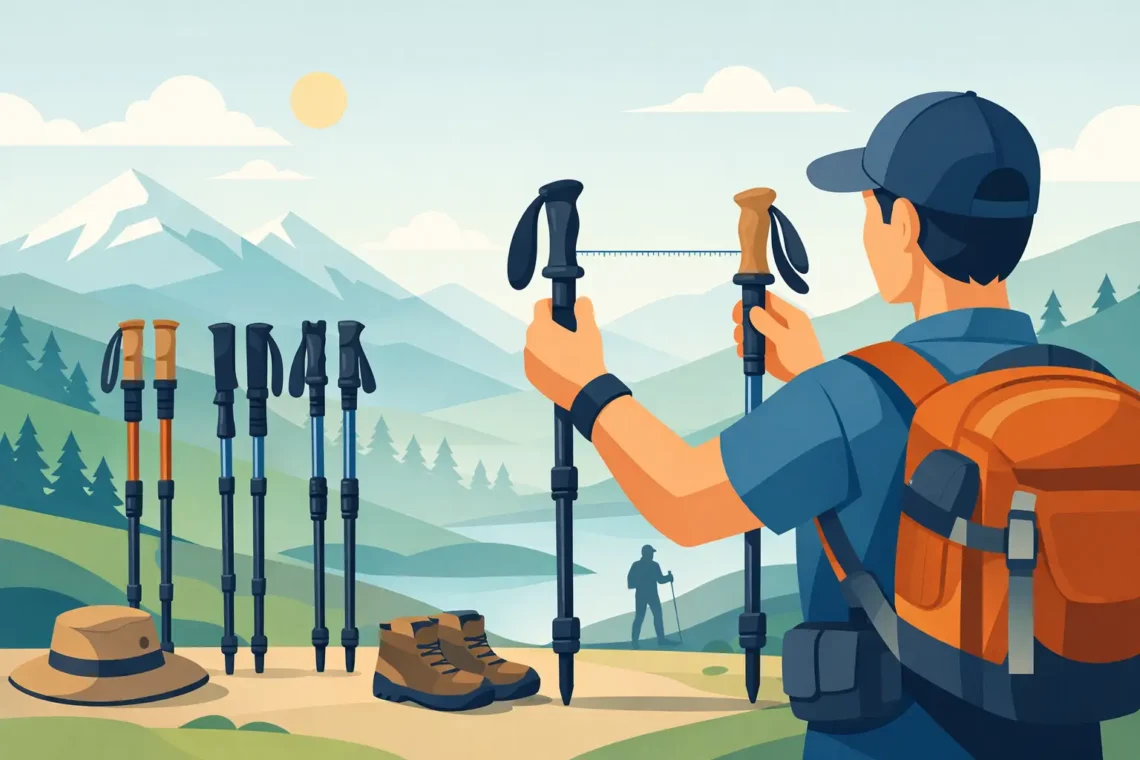
Even the best-built poles feel wrong if the sizing is off. A good starting point is this: when the pole tip is on the ground near your foot, your elbow should sit close to a 90-degree angle. That gives you an efficient, comfortable position for general hiking.
Adjustability helps because real trails are not flat. Shortening poles slightly on climbs can keep your shoulders and wrists in a more natural position. Lengthening them on descents gives you better support and balance. That is one reason adjustable poles are such a safe recommendation for newer hikers.
Grip shape also affects fit. Some grips are thicker, some are more ergonomic, and some extend farther down the shaft for changing hand position without stopping to adjust length. If you hike steep terrain, that extended grip can be more useful than it looks on paper.
Don’t overlook grip material and straps
Handles are where comfort lives or dies. Cork, foam, and rubber are the most common grip materials, and each has a place.
Cork is popular because it feels natural in hand, manages moisture reasonably well, and can become more comfortable over time. Many hikers find it gives the best all-day feel. Foam is also comfortable, usually light, and works well in warm weather because it handles sweat nicely. Rubber tends to insulate well in cold conditions, but it can feel less breathable in heat and may become uncomfortable on longer hikes.
Straps matter too, even though many buyers treat them as an afterthought. A well-designed strap helps transfer some pressure off your grip and reduces hand fatigue. Poor straps can chafe or feel awkward quickly. If you use poles regularly, comfortable straps are not a bonus feature – they are part of the core fit.
Locking mechanisms can make or break convenience
Pole locks tend to be either twist locks or lever locks. Lever locks are generally easier to adjust on the trail, easier to use with gloves, and easier to trust at a glance because you can see whether they are secure. For most buyers, they are the more user-friendly choice.
Twist locks can work well, and some hikers like their cleaner look, but they are often more finicky over time. If reliability and ease of use are high on your list, lever locks are usually the safer bet.
This is one area where spending a little more can pay off. A cheap pole with frustrating locks can become annoying enough that you stop using it, which defeats the point of buying poles in the first place.
Tips, baskets, and traction features
Many hikers focus on the shaft and grip, but the business end of the pole matters just as much. Carbide tips usually offer better bite and durability on dirt, rock, and mixed terrain. Rubber tip covers can be useful for pavement, travel, or reducing noise, but they are not a replacement for solid trail traction.
Baskets help keep poles from sinking too deeply. Small trekking baskets are fine for most three-season hiking. If you hike in snow or soft ground, larger snow baskets are worth having. The key is making sure your poles support interchangeable baskets if you expect to use them year-round.
Price vs value: where to spend and where to save
If you are trying to avoid a bad purchase, this is the practical answer: spend on comfort, locks, and durability before chasing the lightest possible weight. Those are the features that affect your experience most often.
Entry-level poles can be perfectly good for occasional day hikers, especially if they use aluminum shafts and dependable lever locks. Mid-range poles often hit the best value point because they improve comfort and reliability without jumping into premium pricing. High-end poles make the most sense for hikers who care deeply about weight savings, compact packability, or specialized performance.
For many Outdoor Patron readers, the sweet spot is a pair that is adjustable, reasonably light, durable enough for regular use, and comfortable in hand for several hours at a time. You do not need every premium feature. You need the ones that match how you actually hike.
A quick way to narrow your final choice
If you are still comparing several pairs, ask four simple questions. Will you use them mostly for day hikes or backpacking? Do you care more about low weight or durability? Do you need compact storage for travel or fast hikes? And will you use them in snow or only in three-season conditions?
Those answers usually point you in the right direction faster than reading a long spec chart. The best hiking poles are not the ones with the most features. They are the pair you can trust, adjust easily, and carry without second-guessing once the trail turns steep.
Buy for the terrain you hike most, not the dream trip you might take once. That usually leads to better value, fewer regrets, and a pair of poles you will actually keep using.