A lot of surf anglers blame the rod or reel when their setup feels off, but line choice is often the real issue. If you’re weighing braid vs mono for surf fishing, you’re really deciding how you want your setup to cast, handle current, absorb shock, and survive rough structure.
There is no one-size-fits-all winner here. Braid gives you better sensitivity and thinner diameter for longer casts, while monofilament is simpler, cheaper, and more forgiving when a fish surges in the wash. The best pick depends on what you throw, where you fish, and how much hassle you want in your system.
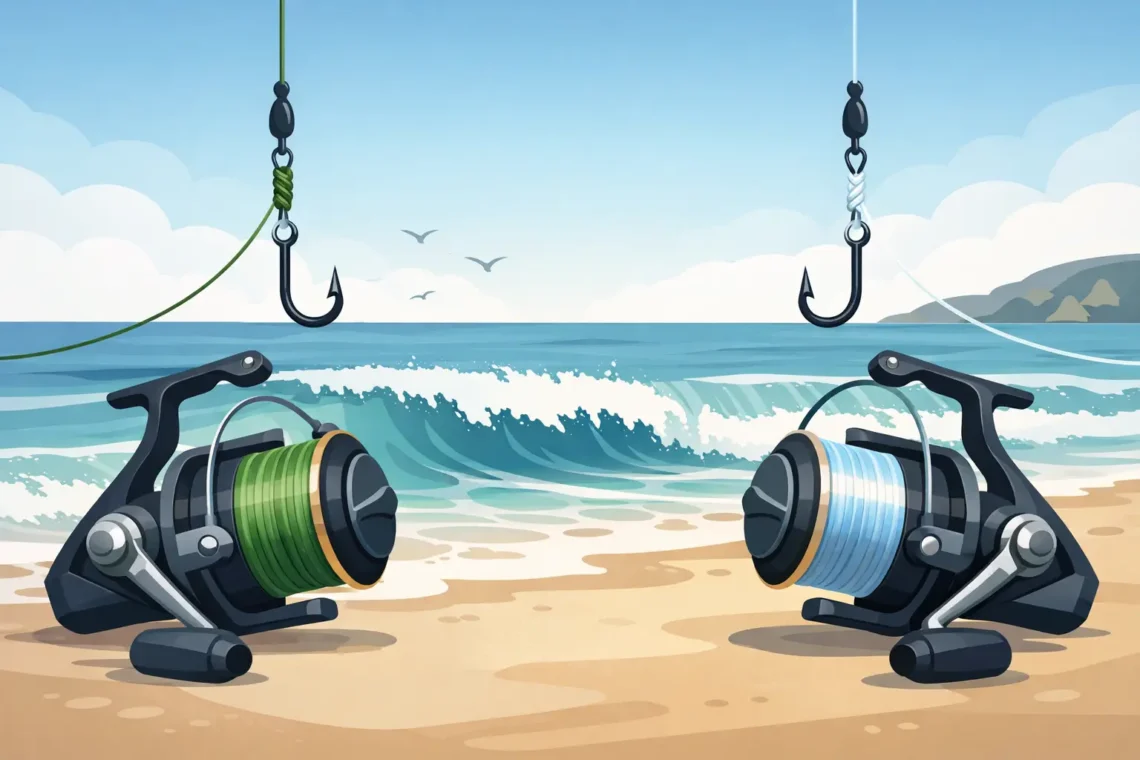
Braid vs mono for surf fishing: the quick answer
If you want the short version, braid is usually the better choice for anglers who want maximum casting distance, better bite detection, and stronger hooksets at range. Mono is usually the better choice for anglers who want a lower-cost, easier-to-manage setup that handles shock well and works nicely with bait fishing.
That said, most surf fishing setups are not purely braid or purely mono in practice. Many anglers spool braid as their main line, then add a mono or fluorocarbon shock leader. Others stick with straight mono because it is dependable, inexpensive, and plenty effective for common beach species.
What braid does well in the surf
Braid has two big advantages on the beach: diameter and sensitivity. Because braid is much thinner than mono for the same breaking strength, it cuts through the air and current better. That usually means longer casts and less bow in the line when wind or sweep is pushing hard.
It also transmits contact far better than mono. If you’re working lures for striped bass, bluefish, snook, redfish, or similar species, braid makes a noticeable difference. You can feel the jig, the bottom, light taps, and changes in action more clearly. At long range, that extra feedback matters.
Hooksets are another point in braid’s favor. With very little stretch, you move more energy from rod to hook, especially when the fish eats far from shore. If you’re throwing metals, soft plastics, bucktails, or plugs, braid generally makes the whole setup feel sharper and more connected.
There is also spool capacity to consider. A surf reel loaded with braid can hold more yardage at useful strengths, which gives you breathing room if a fish runs or if you fish beaches with deep troughs and strong lateral current.
Where braid can be a headache
Braid is not perfect, and the drawbacks matter in surf fishing. The biggest one is forgiveness – or lack of it. Since braid barely stretches, hard casts and violent strikes put more stress on knots, leaders, and rod loading. Without the right leader system, you can crack off on the cast or pull hooks more easily.
Wind can also make braid annoying. It is more prone to wrapping around rod tips and guides if your line management is sloppy. On spinning gear, poorly packed braid can create wind knots, especially with light lures or in gusty beach conditions.
Abrasion resistance is another common concern. Braid does not like rubbing across shells, rocks, bridge rubble, or rough structure. In clean sand this may not be a major problem, but on jetties, cuts with shell beds, or mixed-bottom beaches, braid alone is not something most anglers should trust without a leader.
Cost is part of the equation too. A good braid is more expensive up front than mono. It may last longer if maintained well, but for value-focused anglers building a simple surf setup, mono still makes a lot of sense.
What monofilament does well in the surf
Mono is still popular for good reason. It is affordable, easy to spool, easy to knot, and generally more forgiving for beginners. If you are fishing bait from a sand spike and waiting for the rod to load up, mono often works extremely well.
Its stretch is a benefit in many surf situations. That built-in give helps absorb shock on hard casts with sinkers and bait rigs, and it cushions sudden runs from fish in close. In the surf zone, where waves and side pressure can create erratic tension, mono’s stretch can keep hooks pinned and reduce pulled hooks.
Mono also tends to be more abrasion-tolerant in rough contact than braid of similar practical use. Around shell fragments, rough sand, pilings, or rocks, that can save fish and rigs. It is not invincible, but it is less fragile in the wrong kind of contact.
Another plus is simplicity. Straight mono is about as low-drama as surf line gets. For anglers who fish occasionally, want a reliable weekend setup, or do not want to fuss with backing, leader knots, and line dig-in, mono is hard to beat.
Where mono gives up ground
The biggest trade-off with mono is diameter. Thicker line creates more drag in the air and water, which can reduce casting distance and make current push your rig more. If you are trying to hit outer bars or keep a lure working cleanly in sweep, mono can feel less efficient.
Sensitivity is the other obvious drawback. Mono stretches, and that stretch mutes light bites and reduces feel. For bait fishing, this is often acceptable. For active lure fishing, it can make the setup feel less responsive, especially when fish are subtle or the surf is noisy.
Mono also needs replacement more often. Salt, sun, and heat wear it down faster than many anglers realize. If your line sits on the reel for months between trips, it is worth checking closely for memory, nicks, and chalky texture.
So which one is better for your style of surf fishing?
If you mostly throw lures, braid is usually the better tool. It helps you cast farther, feel more, and work the bait with better control. For anglers targeting fish that hit on the move, that extra connection is a real advantage.
If you mostly fish bait and wait, mono is often the better value. It is forgiving, handles casting shock well, and does not require as much setup knowledge to use effectively. Many casual and beginner surf anglers will have a smoother experience starting with mono.
If you fish in heavy current, braid gets the edge because the thinner diameter keeps your line from belly-drifting as much. If you fish around rough bottom, shell, or rocks, mono becomes more appealing unless you are running a stout leader with braid.
If you want one practical middle ground, braid main line with a mono shock leader is hard to argue with. It gives you braid’s casting and sensitivity while adding some shock absorption and abrasion insurance where it matters most.
Recommended line choices by use case
For lure-focused surf fishing, many anglers do well with 20 to 30 pound braid paired with an appropriate leader. That range keeps the setup manageable on spinning gear while still offering solid strength for common surf species.
For bait fishing with a spinning setup, 15 to 20 pound mono is a dependable starting point for many beaches. If you are using heavier sinkers, bigger baits, or targeting larger fish, move up accordingly and consider a shock leader.
For conventional surf casting with heavy payloads, mono remains a trusted option, especially when anglers want a direct, proven system. Braid can still work very well here, but it demands more attention to leader strength, knots, and casting technique.
The mistake to avoid
The wrong choice is not always picking braid or mono. More often, it is using either one without matching it to your rod, reel, casting weight, and fishing style. A great line on the wrong setup will still feel bad on the beach.
If you’re shopping close to a purchase, think less about which line is best in general and more about which one fits your actual surf fishing. That is usually how you avoid wasting money and end up with a setup you trust.
For most anglers, the honest answer on braid vs mono for surf fishing is simple: braid is the better performance option, mono is the better simplicity option. If performance matters most, start with braid and a proper leader. If ease, value, and forgiveness matter most, spool mono and go fish.
A good surf setup should make you more confident, not more complicated – and the right line is one of the cheapest ways to get there.