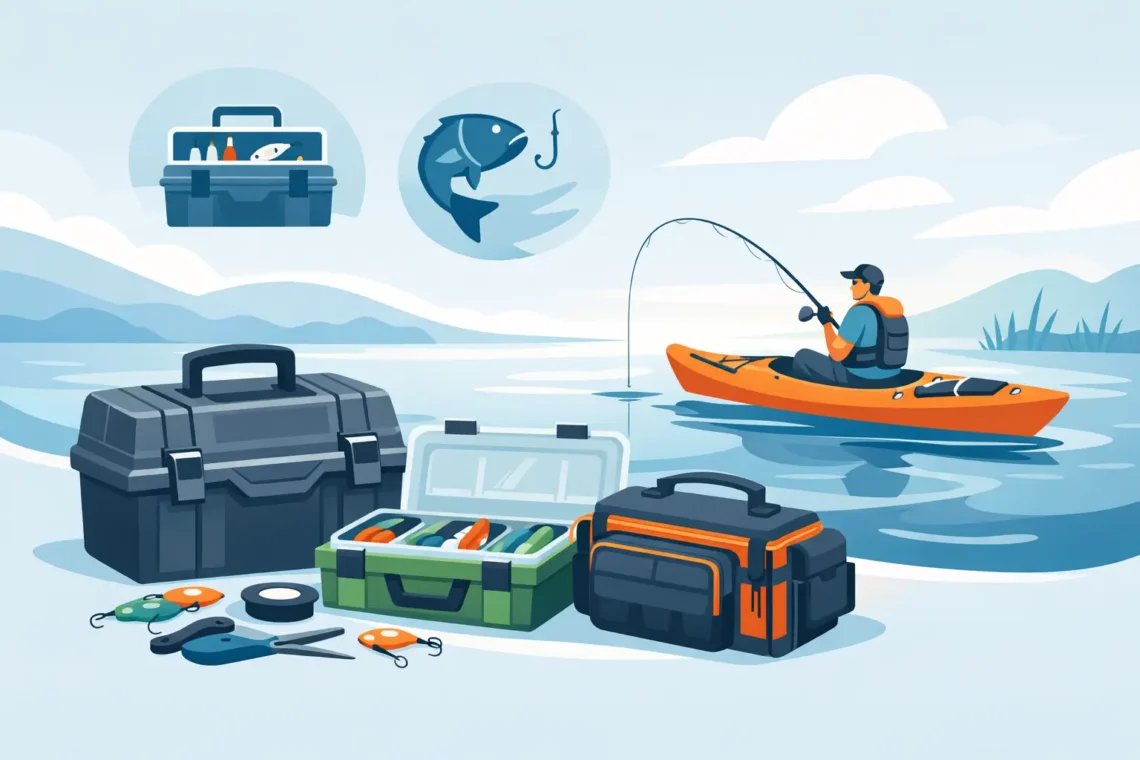
Space disappears fast on a fishing kayak. One crate, one hatch, a couple of rod holders, and suddenly every hard bait, jig head, and leader spool has to earn its spot. That is exactly why choosing the best tackle box for kayak fishing is less about buying the biggest organizer and more about finding one that fits your deck, your storage layout, and the way you actually fish.
For most kayak anglers, the right tackle box needs to do three things well. It has to keep gear dry enough for real-world use, stay organized when the boat rocks or gets splashed, and fit inside a milk crate, hatch, or tank well without wasting space. A box that works great on a bass boat can feel clumsy on a kayak, especially if it is too tall, too heavy, or hard to open one-handed.
What makes the best tackle box for kayak fishing?
Kayak fishing changes the usual buying priorities. On a larger boat, extra bulk is annoying but manageable. On a kayak, it affects access, balance, and how quickly you can retie or switch lures when fish are moving.
The best options are usually compact utility trays, soft tackle bags built around standard-size boxes, or waterproof cases for anglers who fish rough water. Slim profiles matter because they slide into storage areas more easily. Latch quality matters because cheap latches fail fast when they are exposed to salt, spray, and repeated opening. Divider security matters too, since loose dividers can turn an organized tray into a mixed pile of trebles and tungsten.
Material and closure style also deserve attention. Fully waterproof boxes are great for protecting terminal tackle, hooks, and electronics-related accessories, but they can cost more and add some bulk. Standard splash-resistant trays are often enough for anglers who store gear inside a hatch or tackle crate. There is no single right answer here – it depends on whether your biggest issue is rain, paddle drip, surf launches, or just limited space.
8 tackle boxes worth considering
1. Plano Edge 3600
If you want a premium utility box, the Plano Edge 3600 is one of the strongest all-around choices. It is compact enough for kayak storage, but it still gives you enough room for hard baits, terminal tackle, or soft plastics depending on how you set it up.
What makes it stand out is the build quality. The latch system feels more secure than what you get on many budget trays, and the sealing is a real plus if your kayak takes on regular spray. It is not the cheapest option, but this is the kind of box that makes sense if you are tired of replacing flimsy organizers every season.
2. Plano 3700 StowAway
The classic Plano 3700 StowAway remains a smart pick for anglers who use a milk crate system behind the seat. It is simple, affordable, widely compatible, and easy to stack. If your kayak setup is built around standard crate dimensions, this size is hard to ignore.
The trade-off is that not every kayak stores 3700 boxes equally well. Some hatches and side storage areas are better suited to 3600 trays. Still, for straightforward organization at a good value, this one keeps earning its place.
3. Plano 3600 StowAway
For many anglers, the 3600 size is the sweet spot. It fits more easily in compact storage spaces and feels less awkward when you pull it out on the water. If you fish from a smaller sit-on-top or pedal kayak with tighter access points, a 3600 tray often feels more practical than a 3700.
That smaller footprint comes with less capacity, of course. But in kayak fishing, better fit usually beats more volume. A box you can reach quickly is more useful than a giant one you keep fighting with.
4. Flambeau Zerust Max Waterproof Box
This is a good option for anglers who need stronger moisture protection, especially if they fish in humid conditions or around saltwater. The waterproof seal helps protect terminal tackle from rust, and the anti-corrosion design adds real value if you do not always unpack everything after every trip.
Like many waterproof boxes, it can be a little bulkier than a basic utility tray. That means it works best when you know exactly what you want it to store, rather than trying to make it your one-box solution for everything.
5. KastKing HyperSeal Utility Box
The KastKing HyperSeal line is worth a look if you want a box that balances water resistance with practical storage. These boxes are generally built for anglers who want stronger sealing than bargain trays but do not want to spend top-tier money on every organizer.
This kind of box works especially well for hooks, weights, jig heads, and small hard baits. For kayak fishing, that makes sense because protecting the small stuff often matters most. If a few soft plastics get damp, it is not a big deal. Rusty terminal tackle is a bigger problem.
6. Plano Guide Series 3600 Tackle Bag
Some kayak anglers are better served by a tackle bag than a single hard box, and the Plano Guide Series 3600 bag is a good example. It uses standard utility trays but gives you extra pockets for leader spools, pliers, scent, and tools.
This style works well if you want one grab-and-go setup that moves easily from truck to kayak. The drawback is that bags can take on more water than sealed boxes if they sit exposed all day. They are convenient, but they are not always the best choice for rough launches or heavy spray.
7. Wild River Nomad Lighted Tackle Backpack
A backpack is not the first thing most anglers picture when searching for the best tackle box for kayak fishing, but it can be a smart choice if you bank fish, wade, and kayak fish with the same gear. It is especially useful for anglers who launch in different spots and want easier transport.
For on-kayak use, though, this depends heavily on your layout. A backpack is less deck-friendly than a crate or low-profile bag, so it is better for transport and storage than constant mid-trip access. If versatility matters more than minimalism, it is still a strong option.
8. YakAttack BlackPak Pro with tackle trays
This is more of a storage system than a single tackle box, but it deserves a spot for serious kayak anglers. The BlackPak Pro is built for kayak rigging, and when paired with utility trays, it creates an organized, secure rear storage setup that feels purpose-built rather than improvised.
It is also one of the more expensive routes. If you fish often and want a cleaner system with better integration, the cost can be justified. If you are a casual weekend angler, a simple crate and a few Plano trays may deliver better value.
How to choose the right size and style
The best buying decision usually starts with your kayak, not the tackle box. Measure your tank well, front hatch opening, side storage, or crate area first. A lot of buyers skip that step and end up with boxes that technically fit the kayak but are frustrating to pull in and out.
If you keep tackle in a rear crate, 3700 trays make sense because they maximize space. If you prefer gear in a hatch near your legs or under the seat, 3600 trays are often easier to manage. If your fishing style is simple – maybe a few moving baits, terminal tackle, and backup leaders – a compact waterproof box may be all you need.
Think about your target species too. Bass anglers often carry more lure variety, which makes modular trays useful. Inshore anglers may care more about corrosion resistance and sealed storage. Catfish or panfish anglers can usually get by with simpler, cheaper storage unless they carry a lot of terminal gear.
Waterproof vs standard tackle boxes
This is one of the most common trade-offs. Waterproof boxes cost more, and they are not always necessary. If your tackle rides inside a dry hatch or under a seat, a standard box may be perfectly fine. If your storage stays exposed in the tank well, that extra sealing becomes more valuable.
There is also a middle ground. Many anglers use one waterproof box for hooks, weights, and jig heads, then store bulkier lures in standard trays. That setup often gives you better value than going all-in on premium sealed boxes for every category.
Small details that matter on the water
Easy-open latches, clear lids, and secure dividers sound minor until you are drifting toward a dock piling while trying to swap baits. Kayak-friendly tackle storage should support quick access, not create more fiddling.
Weight matters too. Overloading the rear tank well with too much tackle can make the kayak feel less balanced, especially on smaller hulls. Most anglers fish better when they bring fewer boxes and organize them around one trip plan instead of carrying every lure they own.
That is also where a trusted source like Outdoor Patron can help narrow the field. You do not need fifty options. You need the few that actually fit how and where you fish.
Which option is best for most kayak anglers?
For pure versatility, a 3600 or 3700 Plano-style utility box is still the safest recommendation. It is affordable, easy to replace, and works with a huge range of kayak crate systems and tackle bags. If you want better moisture protection and stronger build quality, stepping up to something like the Plano Edge 3600 is a worthwhile upgrade.
If your fishing is mostly inshore, surf-adjacent, or consistently wet, prioritize waterproof sealing over maximum storage. If your kayak setup is tight and minimalist, smaller trays will usually serve you better than oversized boxes. And if you transport a lot of gear between different fishing styles, a bag or backpack system may be the more practical long-term choice.
The right tackle box should make your time on the kayak easier, not more crowded. Pick the one that fits your storage space, your water conditions, and the amount of gear you really use, and you will feel the difference every time you reach back for a lure change.